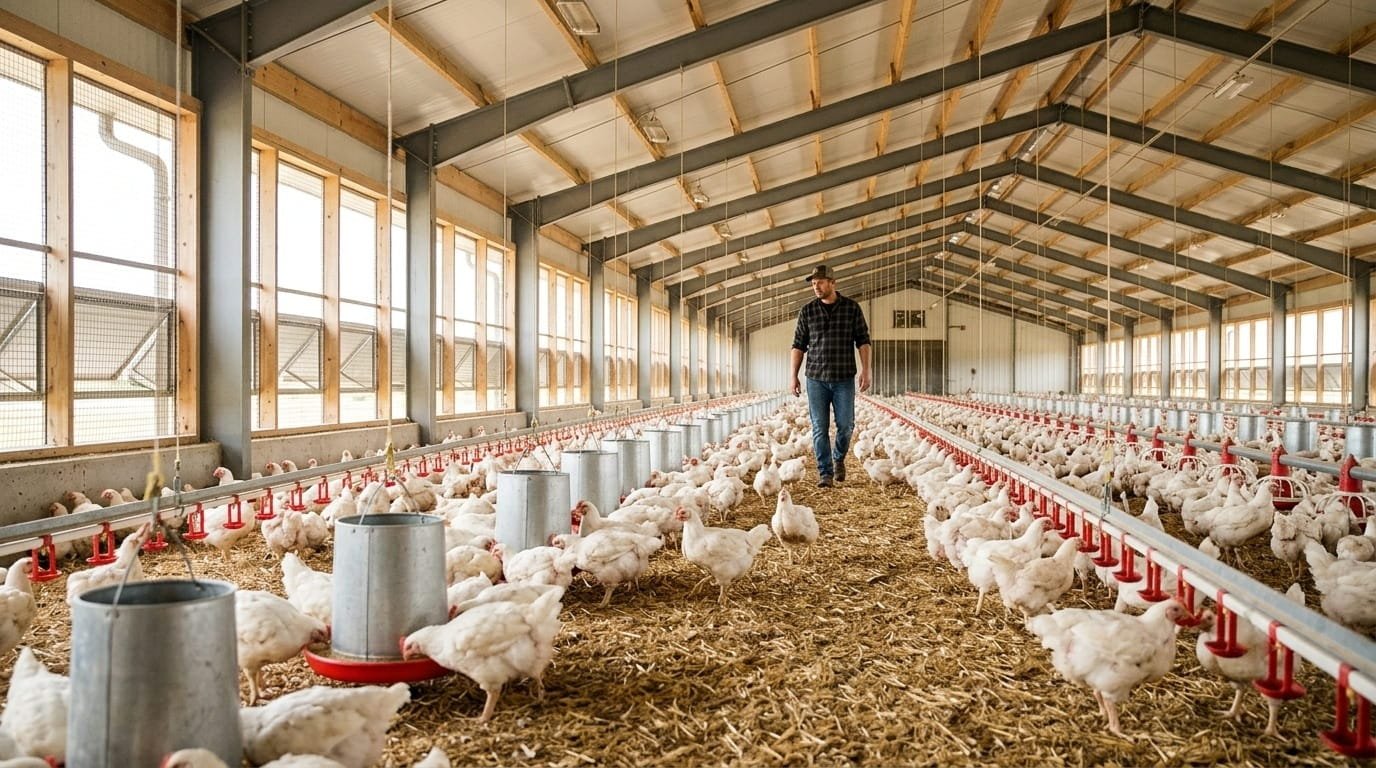
This guide explains how to make a chicken poultry farm from scratch, whether you’re in Lahore, Karachi, or anywhere else in the world. It walks you through every step — housing, breed selection, feed, biosecurity, and the realistic costs involved — so you can plan a poultry farming business in Pakistan or elsewhere with confidence.
Poultry contributes meaningfully to national food security. In Pakistan, the sector is a recognized part of the agricultural economy, supplying both meat and eggs to a fast-growing population. Globally, chicken remains the most widely consumed animal protein, which keeps demand — and opportunity — steady for new farmers.
How to Make a Chicken Poultry Farm: The Basics
Poultry farming is the practice of raising domesticated birds, primarily chickens, for meat or eggs. Most commercial operations fall into two categories:
- Broiler farming — raising chickens for meat. Broilers typically reach market weight in about 6 to 8 weeks, making this a faster turnover business.
- Layer farming — raising hens for egg production. Layers usually begin laying around 18 weeks of age and can continue producing for roughly 12 to 18 months.
Some farms also run breeding operations, supplying day-old chicks to other broiler and layer farmers. Choosing between broiler farming, layer farming, or a mixed operation is the first strategic decision in any poultry farm business plan.
Step-by-Step: How to Start a Poultry Farm
1. Research and Write a Business Plan
Before buying a single chick, study your local market. Look at demand for meat versus eggs, nearby feed suppliers, and competitor pricing. A written poultry farming business plan should include your target flock size, expected costs, housing design, and a marketing approach. This step also helps when approaching banks or agricultural support programs for financing.
2. Choose the Right Location
A poultry farm setup should be located away from residential density to reduce noise and odor complaints, but close enough to feed suppliers and markets to keep transport costs down. Good drainage, road access, and reliable electricity or backup power are essential, since ventilation and lighting systems depend on consistent power.
3. Plan Housing and Space Requirements
Poultry housing needs vary by bird type and age. As a general guide:
- Day-old to 4-week-old chicks need roughly 0.25–0.5 square feet of floor space each.
- Broilers at market age typically need about 0.8–1.0 square feet per bird.
- Layers need more room — around 1.5–2.0 square feet per bird — since they live longer and require space to move between feeders, waterers, and nesting areas.
The poultry house should be well-ventilated, dry, and free of drafts, with proper lighting and temperature control, especially during the first few weeks when chicks are most vulnerable to cold stress. Getting this right is one of the most important parts of learning how to make a chicken poultry farm that stays productive and disease-free.
4. Select a Breed and Source Day-Old Chicks
Buy day-old chicks only from a reputable hatchery or registered poultry breeding farm. Reliable sourcing reduces the risk of introducing disease into your flock and ensures consistent growth performance. Popular broiler and layer breeds vary by region, so consult local veterinary or agriculture extension services for breeds best suited to your climate.
5. Set Up Feed, Water, and Nutrition
Feed is typically the largest ongoing cost in a poultry business. Chicks and adult birds need age-appropriate feed formulations, along with continuous access to clean water. Feeders and waterers should be spaced evenly throughout the house so no bird is forced to compete excessively for access, which can affect growth rates and flock uniformity.
6. Prioritize Biosecurity and Disease Prevention
Disease outbreaks are one of the biggest risks in poultry farming. Known threats in the region include Newcastle disease, infectious bronchitis, gumboro disease, fowl pox, and coccidiosis. Basic biosecurity practices include:
- Restricting visitor access to the poultry house
- Disinfecting footwear and equipment before entry
- Following a veterinarian-approved vaccination schedule
- Isolating new or sick birds immediately
- Maintaining strict cleaning routines between flock cycles
Working with a licensed veterinarian to design a vaccination and health-monitoring program is one of the strongest protections for your investment.
7. Plan Marketing and Sales Channels
Once birds are ready, common sales channels include local meat shops, wholesale markets, supermarkets, and direct sales to households. For egg producers, building relationships with grocery stores and local vendors creates steady, repeat demand. Building a simple brand — even just a farm name and consistent quality — helps a small operation stand out in a competitive local market.
Poultry Farming Business Plan in Pakistan: Cost Considerations
Startup costs for a poultry farming business in Pakistan vary widely depending on flock size, land ownership, and housing type. Key cost categories typically include:
- Land or shed construction (or rental)
- Day-old chicks
- Feed for the full growth cycle
- Vaccines and veterinary care
- Equipment such as feeders, waterers, and heating lamps
- Utilities and labor
Because input prices, feed costs, and chick prices fluctuate, it’s best to get current quotes from local suppliers and, where possible, consult the Pakistan Poultry Association or a local livestock extension office before finalizing your budget. Avoid relying on outdated or unverified profit figures circulating online — actual returns depend heavily on local market conditions, disease management, and feed efficiency.
Common Challenges in Poultry Farming
New farmers should plan for these recurring challenges:
- Disease outbreaks, which can affect an entire flock quickly without proper biosecurity
- Feed price volatility, since feed is the largest recurring expense
- Temperature extremes, which stress birds and reduce productivity
- Market price fluctuations for both meat and eggs
Building relationships with a local veterinarian, feed supplier, and experienced farmers in your area is one of the most practical ways to manage these risks early on.
Frequently Asked Questions
Is poultry farming profitable in Pakistan?
Profitability depends on flock management, feed costs, disease control, and local market prices. There is no guaranteed return, and new farmers should budget conservatively while building experience.
How much space do I need for 100 chickens?
Using general floor-space guidelines, 100 broilers may need roughly 100–200 square feet depending on the housing system, while layers require more space per bird.
Do I need government registration to start a poultry farm?
Requirements vary by country and region. In Pakistan, check with local livestock and agriculture department offices for licensing and zoning requirements before construction.
Final Thoughts
Learning how to make a chicken poultry farm comes down to careful planning: choosing between broiler and layer farming, designing proper housing, sourcing healthy chicks, managing feed and biosecurity, and building reliable sales channels. Start small, learn from each flock cycle, and scale gradually as you gain hands-on experience and local market knowledge.
This article is for general informational purposes. Consult a licensed veterinarian and local agricultural authorities before making farm setup, health, or investment decisions.